Friday, 14 December 2012

Early Childhood Education

Early Childhood Education is designed to prepare students to enter a number of fields related to the social, emotional, physical, and intellectual care and guidance of children or to prepare them to continue their education in elementary or special education, physical or recreational therapy, social work, and paediatric nursing. Early childhood educators nurture youngsters whose parents are at work or cannot be with them for other reasons.

A child's needs at this period are different from those of older schoolchildren, because early childhood sees the greatest growth and development, when the brain develops most rapidly, almost at it’s fullest. It is a period when walking, talking, self-esteem, vision of the world and moral foundations are established. The early years of life are critical to the development of intelligence, personality and social behaviour. If these fundamental capabilities are not well established from the start, and especially if neurological damage occurs, a child's learning potential could be adversely affected.

For programming purposes, it has been decided to extend the concept of early childhood to about 8 years of age. This age range provides the opportunity to reinforce the view of the development as a continuum. It facilitates the interaction between the pre and initial school years. The concept of basic education calls for the inclusion of early childhood and the key "survival" grades, that is, the first two or three grades of primary education. Early childhood education often focuses on children learning through play.

According to UNESCO ECCE (Early Childhood Care and Education) Unit, Early childhood is defined as the period from birth to 8 years old. The terms preschool education kindergarten emphasize education around the ages of 3–6 years. The terms "early childhood learning," "early care," and "early education" are comparable with early childhood education. The terms Day care and Childcare do not embrace the educational aspects. Many childcare centres are now using more educational approaches. They are creating curricula and incorporating it into their daily routines to foster greater educational learning. The distinction between childcare centres being for care and kindergartens being for education, for example, has all but disappeared in countries that require staff in different early childhood facilities to have a teaching qualification.

However, it is necessary to distinguish between nurturance and locomotive learning. One implies the development of vestigial implements of characterized babies; the other refers to hand-eye co-ordination.

Researchers in the field and early childhood educators both view the parents as an integral part of the early childhood education process. Often educators refer to parents as the child's first and best teacher. Early childhood education takes many forms depending on the beliefs of the educator or parent.

Much of the first two years of life are spent in the creation of a child's first "sense of self" or the building of a first identity. This is a crucial part of children's makeup—how they first see themselves, how they think they should function, how they expect others to function in relation to them. For this reason, early care must ensure that in addition to employing carefully selected and trained caretakers, program policy must emphasize links with family, home culture, and home language. Care should support families rather than be a substitute for them.

If a young child does not receive sufficient nurturing, nutrition, parental interaction, and stimulus during this crucial period, the child may be left with a developmental deficit that hampers his or her success in preschool, kindergarten, and beyond. These are the underlying facts taught in primary teacher courses.

While in developed nations today such scenarios are fortunately rare there is a danger of a false belief that more hours of formal education for the very young child yields greater benefits for the child than a balance between formal education and time spent with family. A systematic review of the international evidence suggests that the benefits of early childhood education come from the experience itself of participation and that more than 2.5 hours a day does not greatly add to child development outcome especially if this means the young child is missing out on other experiences and family contact.

For further information contact- iips (9212441844,011-65100006)

http://www.nurseryteachertraining.co.in/

Teacher Training Course

The question of what knowledge, attitudes, behaviours and skills teachers should possess is the subject of much debate in many cultures, like India. Generally, Diploma in Teacher Training curricula can be broken down into these blocks:

• Foundational knowledge and skills—usually this area is about education-related aspects of philosophy of education, history of education, educational psychology, and sociology of education.

• Content-area and methods knowledge—often also includes ways of teaching and assessing a specific subject, in which case this area may overlap with the first ("foundational") area. There is increasing debate about this aspect; because it is no longer possible to know in advance what kind of knowledge and skill pupils will need when they enter adult life, it becomes harder to know what kinds of knowledge and skill teachers should have. Increasingly, emphasis is placed upon 'transversal' or 'horizontal' skills (such as 'learning to learn' or 'social competences', which cut across traditional subject boundaries, and therefore call into question traditional ways of designing the Teacher Education curriculum (and traditional school curricula and ways of working in the classroom).

• Practice at classroom teaching or at some other form of educational practice. Practice can take the form of field observations, student teaching, or an internship


Supervised Field Experiences

Field observations—include observation and limited participation within a classroom under the supervision of the classroom teacher

Student teaching—includes a number of weeks teaching in an assigned classroom under the supervision of the classroom teacher and a supervisor (e.g. from the university)

Internship-teaching candidate is supervised within his or her own classroom

This conventional organization has sometimes also been criticized, however, as artificial and unrepresentative of how teachers actually experience their work. Problems of practice frequently (perhaps usually) concern foundational issues, curriculum, and practical knowledge simultaneously, and separating them during teacher education may therefore not be helpful.

Teaching involves the use of a wide body of knowledge about the subject being taught, and another set of knowledge about the most effective ways to teach that subject to different kinds of learner; it therefore requires teachers to undertake a complex set of tasks every minute. Many teachers experience their first years in the profession as stressful. The proportion of teachers who either do not enter the profession after completing initial training, or who leave the profession after their first teaching post, is high.

A distinction is sometimes made between inducting a teacher into a new school (explaining the school's vision, procedures etc.), and inducting a new teacher into the teaching profession (providing the support necessary to help the beginning teacher develop a professional identity, and to further develop the basic competences that were acquired in college.)

A number of countries and states have put in place comprehensive systems of support to help beginning teachers during their first years in the profession.

Elements of such a program can include:

Mentoring: the allocation to each beginning teacher of an experienced teacher, specifically trained as a mentor.

A peer network: for mutual support but also for peer learning.

Input from educational experts (e.g. to help the beginning teacher relate what she learned in college with classroom reality). Support for the process of self-reflection that all teachers engage in (e.g. through the keeping of a journal).

No initial course of teacher education can be sufficient to prepare a teacher for a career of 30 or 40 years. Continuous Professional Development (CPD) is the process by which teachers (like other professionals) reflect upon their competences, maintain them up to date, and develop them further.

The extent to which education authorities support this process varies, as does the effectiveness of the different approaches. A growing research base suggests that to be most effective, CPD activities should:

• Be spread over time
• Be collaborative
• Use active learning
• Be delivered to groups of teachers
• Include periods of practice, coaching, and follow-up
• Promote reflective practice
• Encourage experimentation, and
• Respond to teachers’ needs.

For more details- Contact- IIPS(9212441844,9990053412)

http://www.nurseryteachertraining.co.in/
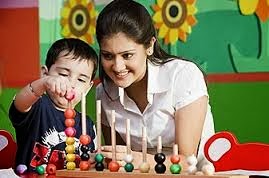
Teacher Training

"If you educate a boy, you educate one individual,
If you educate a girl, you educate a teacher. If you educate a teacher, you educate a community"


As FRANCIS BACON said," knowledge is power" implies that teaching is an art that can be acquired through a series of well- designed series of activities, it’s imperative, therefore due emphasis should be laid on the education of the teachers.

Teacher education may be defined as "all formal and informal activities and experiences that help to qualify a person to assume the responsibility as a member of the educational profession or to discharge his responsibility most effectively Teacher's training basically refers to the policies and procedures designed to equip prospective teachers with the knowledge, attitude, behavior and skills they require to perform their tasks effectively in the classroom, school or a wider community. Although ideally it should be conceived of, and organized as, a seamless continuum; teacher education is often divided into these stages:

• Initial teacher training / education (a pre-service course before entering the classroom as a fully responsible teacher)

• Induction (the process of providing training and support during the first few years of teaching or the first year in a particular school)

• Teacher development or continuing professional development (CPD) (an in-service process for practicing teachers).

There is a longstanding and ongoing debate about the most appropriate term to describe these activities. The term 'teacher training course' (which may give the impression that the activity involves training staff to undertake relatively routine tasks) seems to be losing ground, at least in the US, to 'Teacher Education’ (with its connotation of preparing staff for a professional role as a reflective practitioner).

In the 'consecutive' model, a teacher first obtains a qualification in one or more subjects (often a first university degree), and then studies for a further period to gain an additional qualification in teaching; (in some systems this takes the form of a post-graduate degree, increasingly, this is a Masters).

In the alternative 'concurrent' model, a student simultaneously studies both one or more academic subjects, and the ways of teaching that subject, leading to a qualification as a teacher of that subject.

Other pathways are also available. In some countries, it is possible for a person to receive training as a teacher by working in a school under the responsibility of an accredited experienced practitioner.

In some developed countries, approximately one-third of new teachers come through alternative routes to teacher certification, affiliated with schools of education, where candidates still enroll in university-based coursework. A supplemental component of university-based coursework is community-based teacher education, where teacher candidates immerse themselves in communities that will allow them to apply teaching theory to practice. This also challenges teacher candidates' assumptions about the issues of gender, race, and multicultural diversity.

Teacher training in India, the teachers are fed in from both the government aided schools and from the private ones. Though the path the teacher training should follow is formally spelt out in terms of the syllabi and the courses required the quality of teachers depends on the school, area and the system followed.

In India, teacher salary is not related to the perceived quality of his or her work. Some organizations, however, have the systems to identify the 'best-performing' teachers, and increase their remuneration accordingly. Elsewhere, assessments of teacher performance may be undertaken with a view to identifying teachers' needs for additional training or development, or, in extreme cases, to identify those teachers that should be required to leave the profession. In some countries, teachers are required to re-apply periodically for their license to teach, and in doing so, to prove that they still have the requisite skills.

A sound training and monitoring system would produce a literate and understanding teacher which in turn shapes the lives of the students and the progress of the Nation.


For detailed information- Contact- IIPS(9716058268,9212441844)

http://www.nurseryteachertraining.co.in/
 

Wednesday, 27 June 2012

TEACHING CAREER IN INDIA


Since time immemorial, Teaching has been considered as one of the noblest professions. Teachers have always played the role of catalyst for social changes in the society.

The mankind has always regarded teachers as a boon to the society because it’s only a teacher who by making use of his/ her intelligence, patience and wisdom attempts to not only polish the learner's intellect and aptitude but also takes steps to shape up a  multi-faceted  personality.Teaching
Teaching has always held a place of pride in Indian social milieu and ethos. Right from the famous ancient teachers like Vashisht, Dhaumya, Dronacharya, Kripacharya and Parashurama, religious teachers and preachers like Adi Shankaracharya, Ramanujacharya, Sri Ramakrishna Paramhamsa down to modern day educationists like Dr.Radhakrishnan, Sir Ashutosh Mukherji, Prof. Meghnad Saha, Shri J.C. Bose, Dr. Satyendranath Bose, Dr. Amartya Sen (US resident and Nobel Laureate) not forgetting our former president Dr. A.P.J Abdul Kalam,teachers have by and large been venerated held in high esteem by the pupils of all age group s and fields of study. The keynote of our culture has always been: Acharya Deva Bhava (the teacher is God).

Teaching as professions is divided into many areas of specializations, each requiring different skill-set and method of training. Some of the major areas of specialization include teaching at nursery schools, middle schools, high schools, colleges- universities, institutes, special schools (for students with specific needs, eg- physically challenged ones etc.

Teaching Eligibility Criteria


The teaching profession is a highly specialized field, and hence requires comprehensive training to gain expertise in the field. It has some myths about it. It is commonly believed that anyone can teach, provided he has some knowledge for the subject.

Nothing could be farther from the truth. Knowledge is just one thing that a teacher should have among other things. The fundamental qualities required are excellent communication skills, the ability to hold the attention of young minds, to inspire confidence and finally, the ability to set an example by word and deed.

To enter schools, you should have a B.Ed degree. Colleges across the country offer these degrees. Some universities offer B.Ed courses by correspondence too. One can do the M.Ed later, to add to qualifications.

As a matter of fact, M. Ed is only required to enhance your possibilities of promotion or getting the next higher grade. In case you want to specialize as a nursery teacher only; you must undergo a special nursery teachers ' training, available in various universities.

In case an individual plans to be a games/physical fitness instructor, he/she will require obtaining a certificate/ degree or diploma from any one of the sports institutes located around the country.

College and university teaching requires a different approach. After finishing M.A. in a subject, one can become a specialist by doing M. Phil. or Ph.D. To become a college lecturer, you will have to clear the NET exam conducted by the University Grants Commission (UGC). One can then apply to colleges for a job as and when a vacancy arises.

Teaching Skills and Attributes


One requires a blend essential attributes like patience, confidence, liking for and an understanding of children/ students. Teachers must also have organizing capacity, friendly and helpful nature and skill to communicate well, to initiate a liking in their students minds even in the case of most boring subjects.

A Teacher has to be a friend, philosopher and guide to his wards. The candidate should be initiative driven, passionate about the cause and role of teaching in the society.

Teaching Job Prospects


As a teacher one can opt for a career with:

  • Play schools
  • Nursery schools
  • Primary/elementary schools
  • Secondary schools
  • Colleges/Universities
  • Educational research institutes
  • Self employment by starting institutes/tutorials
  • Special schools: it deals with children having physical and mental handicap and learning disabilities. The job involves lot of sensitivity and emotional attachment towards the students with disabilities.

Teaching Institute

INDOSS INSTITUTE FOR PROFESSIONAL STUDIES 

Location-  J-198 Rajouri Garden opp. Metro Pillar No-419 
Website-   www.nurseryteachertraining.co.in

Monday, 7 May 2012

Teaching As a Career Option in India


Teaching is considered to be one of the noble professions in the world. Anyone who aspires to become a teacher would agree that a teacher has the authority and the responsibility to mould his/her students. Being a vast field, teaching career requires different skills and type of training at different levels. From being a pre-school teacher to a college teacher, the skill sets are different for different levels and so are the qualifications. Teachers can make a difference to the lives of their students by rousing their curiosity and watching them grow. At school level, mostly there are female teachers though there are male teachers too but their percentage is low. At university level, there is an equal mix of male and female teachers.
The different areas of specialization for being a teacher include teaching at nursery schools, primary schools, middle schools, high schools, colleges, universities, institutes, special schools etc. Different type of expertise is required at each level. For those who love to be with children, teaching at schools is a very good option and for those who want to mentor young adults, teaching at college or university level would be preferable. The eligibility and criteria for each level is different. The best part about a teaching job is that it is not restricted to any one field or area of study. No matter what stream have you studied, you can still become a teacher if you are expert at your field and have the necessary qualities required in a teaching job.
The very basic qualities of a teacher are that he/she would be patient, perseverant, ready to adapt to the demands of the students and would have a pleasing personality. Students should look up to a teacher and should not be wary of him/her. To be popular among students, a teacher requires understanding their psychology and speaking to them in their language. Through their intelligence, wisdom and patience, a teacher should be able to exert influence on the students in a positive manner. Students should have confidence in their teacher and should consider him/her as a role model. Such teachers are a boon to the society as they are capable of producing responsible citizens with well-rounded personalities.
There are different courses for teaching at different levels. To get a pre-primary teaching job, one could pursue NTT course offered at most polytechnics and vocational training centres. The eligibility for this course is Class XII with 50% aggregate. To get a teaching job at primary level, one can earn a diploma in education or a Bachelors in Education. Graduates of Home Science can also apply for primary teachers' job. To be a secondary or senior secondary teacher, one has to have a B.Ed degree after graduation. These are called Trained Graduate Teachers (TGTs), and after post-graduation they are called postgraduate trained teachers (PGTs).
To pursue teaching at the university level, one needs to have a good academic record which means minimum of 55% at master's degree in the relevant subject and after which one has to take the eligibility test for lecturers called National Eligibility Test (NET). This test is conducted by UGC, CSIR or similar tests accredited by the UGC. When one clears this exam, one becomes eligible for the job of a lecturer or a university teacher.
To be a successful teacher, one has to be passionate about the subject that one is teaching. It is one's interest in the subject that can secure one's future. Teaching should not be taken up as a back-up option. It should be taken up only if one strongly believes in oneself as a mentor because teachers are responsible for the future of many a student. A disinterested teacher can completely ruin a student's interest. These days, teaching has also become a lucrative career option. Both government and private school teachers are paid handsomely for their services. One could also get hired for teaching job at a private coaching institute. Or one could start one's own venture. The options for teachers are wide-ranging, from joining schools, to private institutions, to NGOs to teaching in colleges. Thus, a teaching job is full of options and avenues and can open up a path of growth for those who believe in themselves and can train others.

Tuesday, 10 April 2012

Is Teaching a Good Career Choice ?

Teaching can be a wonderful career. However, the public perception of teaching may not match the reality of the job. In fact, teaching has a high rate of attrition, or teachers leaving education for other careers. However, teaching can also be very rewarding. It is important that future teachers know exactly what a teaching position entails. That information will help those trying to decide if a teaching career is for them.

Knowledge and Skill Requirements for Teachers

Teachers have to be masters of the content they teach. That may entail continuing education. In fact, the No Child Left Behind law requires that all teachers be highly qualified in the content areas they teach. Very specific criteria are used to determine if a potential teacher meets the standard for being highly qualified.
All teachers should also be knowledgeable of learning theory and teaching techniques. Students do not all learn in the same way and some students will require a teacher to try multiple methods of teaching in order to achieve mastery. Knowledge of how student disabilities may impact their learning is also essential.

Teacher Personality Traits

Teaching can be very personally fulfilling. However, it takes a lot of patience, energy, and creativity. Teachers must embrace working with all student populations. Even if one does not plan on being a special education teacher, all teachers teach students with special needs in general education classes. Being able to multitask and accommodate different learning needs is essential.
Teachers must always be kind and never condescending or sarcastic. A teacher’s job is to be nurturing and be a mentor. They must always model appropriate behavior for students. There are also lines that have to be drawn. Teachers should understand the difference between being supportive and friendly as opposed to trying to be a student’s friend.

Is Teaching the Right Career Choice?

If you are dedicated, organized, patient, creative and qualified, teaching may be a good choice to make. Teaching jobs can be personally fulfilling, as well as stable. It can also provide a good future with benefits. Investigate the requirements for succeeding as a teacher and decide if teaching is the right choice in careers.


Sunday, 1 April 2012

TEACHING EDUCATION

                                    
Good news ! The right to education (RTE)bill has been passed. Another revolutionary step in the field of education in INDIA. It emphasizes the provision of education for all and the provision of all the facilities in school which make it a school in real sense. It creates the requirement of teachers in schools in large number. The government is planning to appoint about 10 lakh trained teachers in accordance with the RTE bill.Various reforms are also planned to be done in teacher training course conduction. The eligibility and duration of courses like ECCE/NTT/NPTT/JBT/B.ED /DIET Etc. are going to be changed. The recognitions of the teacher training institutes are going to be reviewed. The norms for running such institutions are going to be stricter. The number of seats offered by various state boards and universities would be reviewed. The syllabus which the teacher training courses offer will also face various modifications. For pre-primary,primary and elementary teaching,the respective state boards offer the teacher training programmes.Delhi,being the capital of india offers such training under the head; DIET’s. There are various other institutes like Vidya training institute,Indoss Polytechnia for women and many more offer courses like nursery teacher training(NTT) and nursery primary teacher training(NPTT).For teaching at middle, senior and senior secondary school level , the teachers need to have undergone the B.ed course which is offered by various universities of India in regular and distance mode. The admission to the regular B.ed is done through entrance exams. Universities like DU, IP university offer seats for this teacher training course. The universities of all other states have a seat reservation of 90% for the candidates who are residents of that particular state. The B.ed offered under distance mode requires the applicant to have 2 years teaching experience in a recognized school in that particular state and should be continuing the job and has to appear in the entrance test. Moreover it is of duration 2 years. Many consultants offer direct admission to limited seats in management quota of various colleges of different state universities.To name a few are pioneer education consultants, Indoss institute for professional studies etc.The teaching profession has been made highly attractive for youngsters by this recently passed bill,i.e. Right to education(RTE).We hope that the bill makes a remarkable impact on the education system of india and produces truly educated citizens of india.